
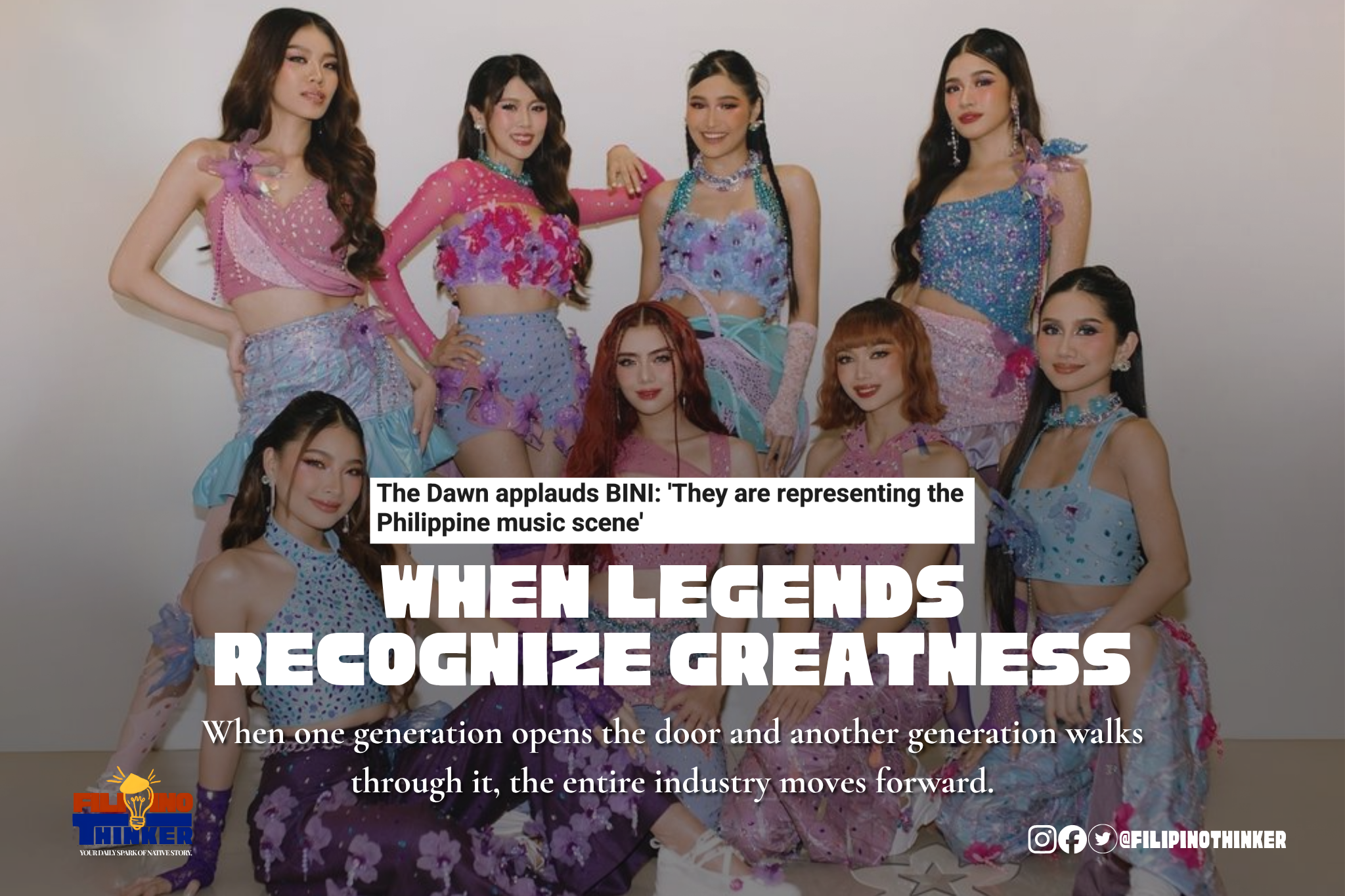
One of the most meaningful forms of recognition an artist can receive is not an award, a chart milestone, or a sold-out concert.
It is the respect of those who came before them.
This is what made the recent praise from The Dawn toward BINI particularly significant. When one of the most influential bands in Philippine music openly acknowledges that BINI is helping represent the Philippine music scene to the world, the statement carries a weight that goes beyond a simple compliment.
It reflects a passing of the torch.
For decades, every generation of Filipino musicians has faced the same challenge: how to bring Philippine music to larger audiences while remaining true to its identity. Different artists have approached this challenge in different ways. Some carried OPM through radio and live performances. Others introduced Filipino music to international communities abroad. Each generation expanded the boundaries of what Filipino artists could achieve.
Today, BINI is carrying that responsibility in a new era.
Their rise has coincided with a moment when the global music industry is becoming more open to artists from different cultures, languages, and backgrounds. The barriers that once limited international visibility are not completely gone, but they are lower than they have ever been. This creates opportunities that previous generations of Filipino artists could only dream about.
Yet opportunity alone is not enough.
Artists still need talent, discipline, and the ability to connect with audiences.
BINI has demonstrated all three.
From sold-out concerts and international appearances to record-breaking streams and growing global recognition, the group has become one of the most visible ambassadors of Filipino music today. Their success is not simply a victory for their fandom. It contributes to a larger story about how Filipino artists are increasingly finding space in global cultural conversations.
This is why The Dawn’s recognition matters.
It represents something deeper than intergenerational support. It reflects an understanding that Filipino music is not a competition between genres, generations, or fan communities. The success of one artist creates opportunities for others. Every breakthrough helps expand the audience for Philippine music as a whole.
Too often, discussions about music become focused on comparisons. Fans debate which artist is bigger, which genre is more important, or which generation produced the greatest talents. But moments like this remind us that music industries grow strongest when artists recognize that they are part of a shared ecosystem.
The Dawn helped define an era of Filipino music.
BINI is helping define another.
The styles may be different. The audiences may be different. The platforms may be different.
But the larger mission remains the same: bringing Filipino artistry to as many people as possible.
Perhaps this is why the statement resonates beyond music itself.
It shows what it looks like when established artists celebrate the success of a younger generation instead of feeling threatened by it. It demonstrates confidence in the future of Philippine music. And it sends a message that every generation has a role to play in building something larger than itself.
In many ways, BINI’s achievements belong not only to the group but also to the long tradition of Filipino artists who helped create the foundation they now stand on.
And when legends recognize that contribution, it becomes clear that the conversation is no longer about whether Filipino music belongs on bigger stages.
The conversation is about how much further it can go.
Because when one generation opens the door and another generation walks through it, the entire industry moves forward.